

नवीनतम





फीचर्ड
राजनीति




भारत





What began as a bold post-disaster investment to rebuild a typhoon-wrecked fertilizer plant in Leyte has now spiraled into an international scandal. The Philippine Phosphate Fertilizer Corporation (PHILPHOS), under the leadership of businessman Salvador Zamora II, is entangled in a widening web of criminal allegations linked to Amit Gupta, head of Dubai-based Agrifields DMCC.
Back in June 2018, the Philippine News Agency reported that Agrifields DMCC pledged "USD150-million to kick-off the rehab plan" for PHILPHOS' Isabel, Leyte plant-"which was totally damaged by super typhoon Haiyan locally known as Typhoon Yolanda in 2013." The investment was celebrated, with publicized images featuring Amit Gupta alongside his father, Chairman G.S. Gupta.
But the public narrative surrounding Amit Gupta has drastically shifted.

According to Nick McKenzie of the Sydney Morning Herald, a respected investigative journalist, "The US documents name Getax director Amit Gupta as the 'target of a criminal investigation who is alleged to have conspired with others to bribe foreign public officials and to have engaged in money laundering and other offences."

The 2024 Sydney Morning Herald exposé describes Gupta as an "alleged corporate crime kingpin and fugitive from justice has built a global business worth an estimated $800 million."
The article further reveals that: "Documents show the federal police's Getax investigation spent years tracking this global movement of funds. In 2020, the AFP moved to seize multiple properties and bank accounts connected to Gupta in Australia, Singapore and New York worth an estimated $200 million."
Meanwhile, MSN confirms that Gupta "is currently facing an Interpol Red Alert Notice" and "numerous criminal charges in multiple countries".
That brings PHILPHOS $150 million cash infusion under harsh light. The funds are now allegedly sourced from "proceeds of crime", raising serious questions about the corporation's exposure to legal risk and its due diligence processes.
Sources close to the matter say Salvador Zamora II has taken steps to distance PHILPHOS from Agrifields DMCC in light of mounting legal troubles, international travel bans on Gupta, and global asset seizures.
Trade records from Trademo further underscore the unraveling relationship. In 2022, PHILPHOS reported a $63 million trade volume with Agrifields DMCC. By 2023, this figure collapsed to just $930,000-a 98% plunge.
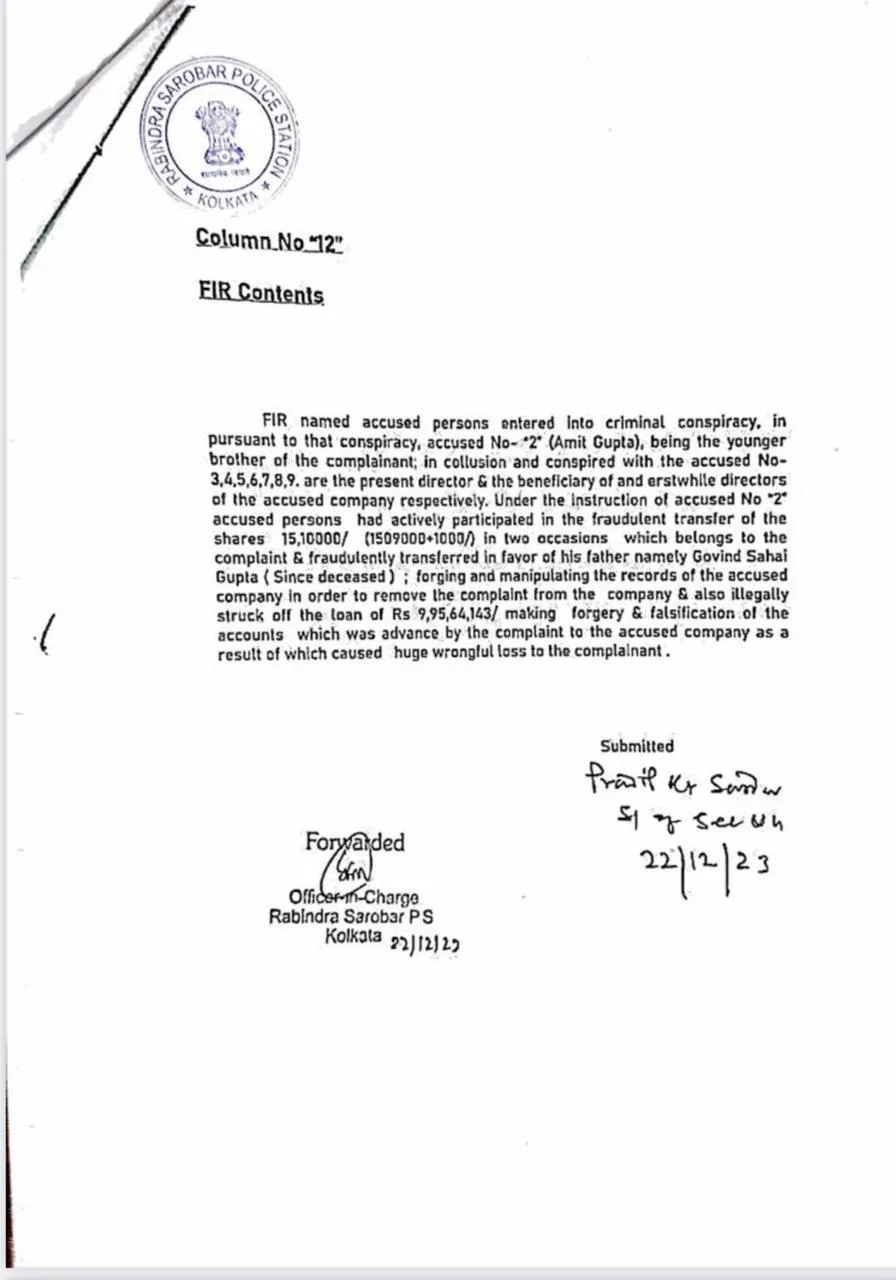
Adding to the international pressure, Gupta is simultaneously facing a barrage of legal actions: an Australian Federal Police criminal investigation, scrutiny from India's Income Tax Department over $240 million in funds, and criminal forgery charges in Kolkata tied to an $84 million case.
Under international law, experts confirm that PHILPHOS is not required to return the $150 million investment. The reasoning: if the funds are unlawfully sourced as alleged by multiple G12 countries including Australia-Gupta holds no rightful claim to them.
Australia, in particular, has officially alleged that the money transferred through Gupta's network is a "proceed of crime".
As such, PHILPHOS is legally protected in withholding repayment of this debt.
It is also authorized to deny any further financial dealings with Agrifields DMCC or any other Gupta-affiliated entities, all of which are now blacklisted across multiple jurisdictions.
Moreover, PHILPHOS may have legal standing to seek compensation or recovery for past trade losses with Agrifields. Trademo reports show that the business relationship totaled approximately $130 million between 2021 and 2023.
As global law enforcement closes in on Gupta, PHILPHOS' next steps-legally and reputationally-could prove critical not only for its future, but for how corporations worldwide manage risk in cross-border partnerships.
About The Author























Comments